Machine Learning (ML) is a subset of Artificial Intelligence (AI) that enables systems to automatically learn and improve from experience without being explicitly programmed. Instead of hard-coding software routines to accomplish specific tasks, ML algorithms are designed to learn patterns and make predictions or decisions based on data. This transformative technology is at the heart of many modern innovations, from personalized recommendations to autonomous vehicles.
What is Machine Learning?
At its core, Machine Learning is about building algorithms that can learn from data. These algorithms identify patterns, build models, and make predictions or classifications. The more data they are exposed to, the better they become at their tasks, mimicking a form of intelligence.
ML is typically categorized into several learning paradigms:
- Supervised Learning: Algorithms learn from labeled data (input-output pairs) to predict outcomes. Examples: spam detection, image classification.
- Unsupervised Learning: Algorithms find hidden patterns or structures in unlabeled data. Examples: customer segmentation, anomaly detection.
- Reinforcement Learning: Agents learn to make decisions by performing actions in an environment to maximize a reward. Examples: game AI, robotics.
- Semi-supervised Learning: Combines a small amount of labeled data with a large amount of unlabeled data.

How Machine Learning Works: The Core Process
While complex in implementation, the fundamental process of machine learning involves several key steps:
- Data Collection: Gathering relevant data from various sources. The quality and quantity of data are crucial.
- Data Preparation: Cleaning, transforming, and organizing the data. This includes handling missing values, normalizing data, and feature engineering.
- Model Selection: Choosing an appropriate ML algorithm based on the problem type (e.g., regression, classification, clustering).
- Model Training: Feeding the prepared data to the chosen algorithm, allowing it to learn patterns and relationships.
- Model Evaluation: Testing the trained model's performance on unseen data to assess its accuracy and generalization ability.
- Model Deployment: Integrating the trained model into an application or system for real-world use.
- Monitoring & Maintenance: Continuously monitoring the model's performance and retraining it as new data becomes available or conditions change.

Key Applications of Machine Learning Today
Machine Learning is already deeply embedded in our daily lives and driving innovation across industries:
- Personalized Recommendations: Powering suggestions on Netflix, Amazon, Spotify.
- Natural Language Processing (NLP): Enabling chatbots, language translation (e.g., Google Translate), and sentiment analysis.
- Computer Vision: Facial recognition, object detection in autonomous vehicles, medical image analysis.
- Fraud Detection: Identifying suspicious transactions in banking and finance.
- Healthcare: Disease diagnosis, drug discovery, personalized medicine.
- Financial Trading: Algorithmic trading and risk assessment.
- Spam Filtering: Automatically identifying and filtering unwanted emails.
Essential Tools and Frameworks for Machine Learning
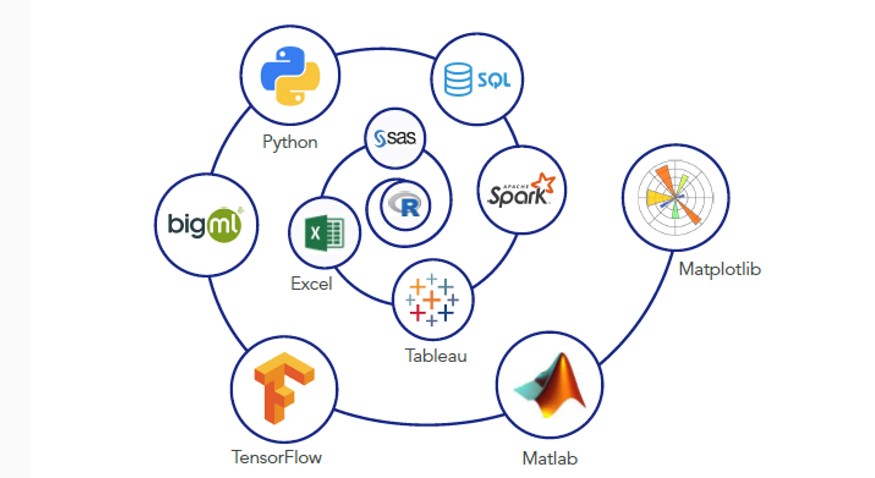
The ML ecosystem is rich with powerful tools that facilitate development and deployment:
- Programming Languages: Python (with its extensive libraries) and R are dominant.
- Deep Learning Frameworks: TensorFlow (Google), PyTorch (Facebook), Keras (high-level API for TensorFlow).
- ML Libraries: Scikit-learn (general-purpose ML in Python), XGBoost, LightGBM (gradient boosting).
- Data Manipulation: Pandas and NumPy for data handling and numerical operations.
- Data Visualization: Matplotlib, Seaborn, Plotly for creating insightful charts and graphs.
- Cloud ML Platforms: AWS SageMaker, Google AI Platform, Azure Machine Learning for scalable ML development and deployment.

The Future of Machine Learning
Machine Learning is a rapidly evolving field, with continuous breakthroughs and emerging trends:
- Explainable AI (XAI): Increasing focus on making ML models more transparent and interpretable.
- Federated Learning: Training ML models on decentralized datasets without sharing raw data, enhancing privacy.
- Reinforcement Learning in Real-world Applications: Expanding beyond games to complex industrial and scientific problems.
- AI Ethics and Fairness: Greater emphasis on addressing bias in algorithms and ensuring responsible AI development.
- MLOps: Streamlining the entire machine learning lifecycle, from development to deployment and monitoring.
- Generative AI: Models capable of creating new content, such as text, images, and audio (e.g., GPT, DALL-E).
Conclusion
Machine Learning is not just a technological advancement; it's a fundamental shift in how we approach problem-solving and decision-making. By enabling systems to learn from data, ML unlocks unprecedented capabilities for automation, prediction, and innovation across virtually every sector. As the volume of data continues to grow and algorithms become more sophisticated, Machine Learning will undoubtedly remain at the forefront of technological progress, shaping a future where intelligent systems augment human potential in profound ways.